Opening hours
Mon.-Fri. : 8h30 - 17H


For CEOs and COOs
… and you’re the one who signs the lease, signs off the budget and answers for the outcome to your board and your teams. This project comes on top of everything else. And when you have doubts about the timetable or the true cost, it’s lonely: everyone expects you to have the answers.

You think in terms of cost, risk and reputation, not boxes. And you sense it: a badly handled move would cost you personally, with your partners, your board and your teams, well beyond the budget.
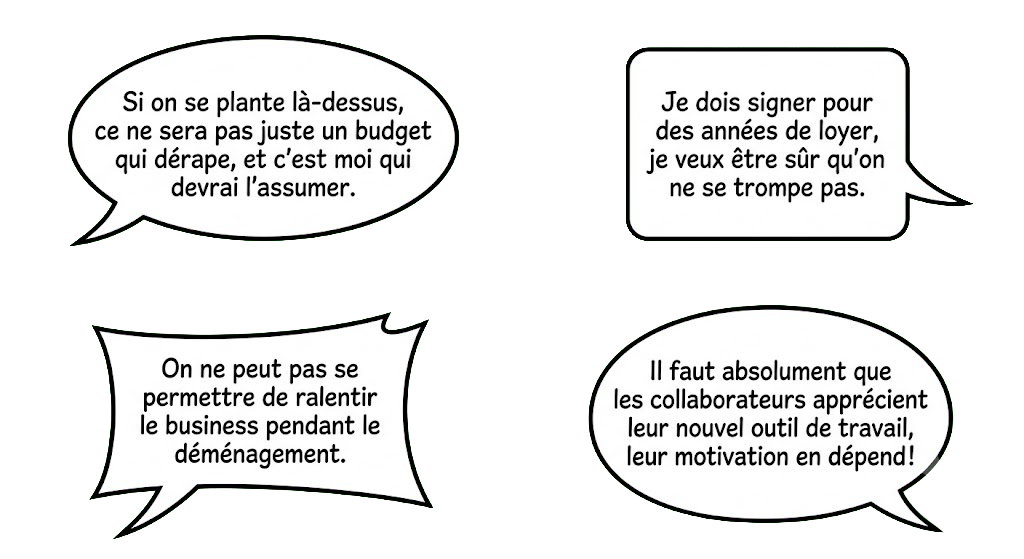
Then there’s a problem you already know: quotes that are hard to compare at best, and impossible to understand at worst. Three offers on the meeting-room screen, and no way of telling who actually does what, at what price. You know from experience that the cheapest quote is neither the best nor the final bill. And you have neither the time nor the inclination to become a building expert just to check.
Deep down, what you need isn’t primarily a mover. It’s not to be left alone with decisions that commit the whole company, without the information to weigh them properly.
Fit-out projects usually fail when handsome office floors are designed without asking the people who’ll work on them, and without keeping a constant eye on the budget. At Go to the Point, we look after the space, the people and the budget: we design around how your organisation actually works and the resources you’ve set aside.
We don’t just sell leaders “a well-managed move”. We back you in your personal role. In practice:

It’s the most natural objection, and it deserves a straight answer. Running the project in-house is never free: it takes time from your HR manager or from you, on work that isn’t your trade. Above all, it lets through the overruns a non-specialist misses: the quote that creeps up, the deadline that slips, the business that stops one day too long. We’re not here to add a layer of cost, but to head off the costs you don’t see coming.
As soon as new premises, a fit-out or a reorganisation of space is on the table, treat it as a project. Most of the leaders we speak to start by looking for “a mover”. It’s an understandable mistake about scope, and it’s what turns a manageable project into one that runs out of control. Here, in order, is what the project actually covers.
Many companies sign a lease and then discover that the premises do not match their needs. Before signing anything, you need to analyse your needs and test the options with test fits: a plan-based study that checks whether a candidate building can house your headcount, your functions and the way you actually work. The test fit should take place before any commitment.
Designing workspaces isn’t picking trendy furniture from a catalogue. It means establishing what your teams need in floor area, functions and uses, then designing from that brief: quiet zones, meeting spaces, circulation. This work determines whether, in six months, your teams will find the new premises suited to the way they work, or experience them as an imposed environment.
Movers, building trades, IT suppliers: each must be consulted, compared and chosen, on the basis of specifications that, most often, nobody in-house has the time or the expertise to write.
Between signing off the works and their completion, someone has to supervise the site and oversee the handover: the moment you check that what was delivered matches what was ordered, and record the snags to be put right.
Your former premises have to be reinstated before you hand them back to the landlord: dismantling, making good, exit inspection. A step often forgotten until it becomes urgent.
Moving day is the peak of tension, when everything has to be ready at once. Afterwards, there’s still work to do: snags to clear, adjustments once people start using the space, and teams to support as they make the new premises their own. This is what we call after care.
And throughout these stages, one continuous thread: change management. It isn’t only the walls that move: working habits, reference points and sometimes the make-up of teams move too. This thread decides whether your people experience the project as something done to them, or as something they go through knowing why.
Are there steps here that nobody told you to think about? Then the project is bigger than first assumed. That’s exactly what we help you scope.

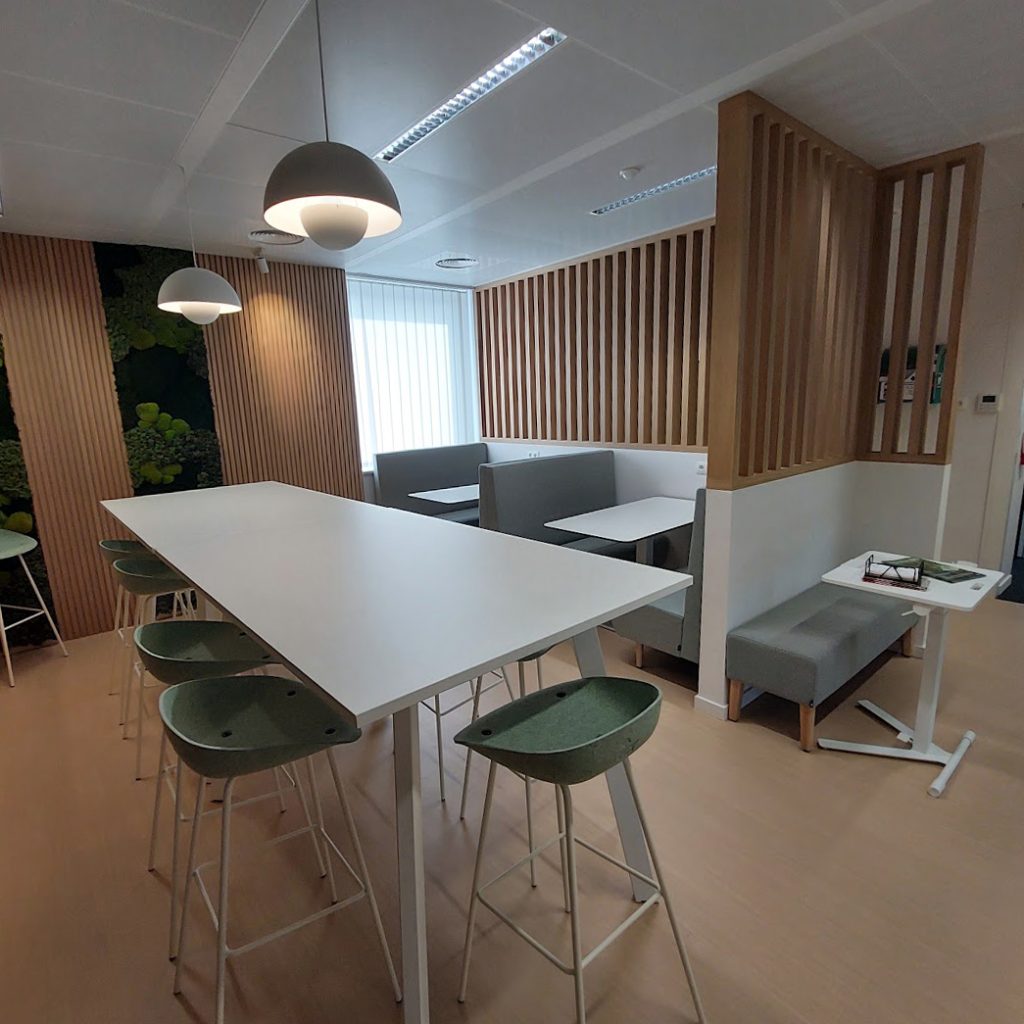
In 2026, Go to the Point took charge of the entire office fit-out of a Walloon certification body, as well as its move to its new premises. Wallonia’s leading certification body was able to completely reorganise how it works and give its staff comfortable workspaces suited to their day-to-day practice.
The project was steered jointly by the HR department and Go to the Point.
You may only be at the first quotes, or already weighing them up. Either way, the decision that counts comes before you sign: knowing exactly what you’re taking on.
In a first conversation, we go through the full scope of the project with you, the costs the quote doesn’t show, and the points that could go off track in your case. There’s no obligation, and you come away with what you need to make an informed decision.
Choose a 30-minute slot to talk about it:
Prefer to write? Use our contact page.